
Why We Prefer Vegan Raw Materials in Cosmetics Manufacturing

Vegan cosmetics manufacturing is no longer a niche request. Retailers ask for it, consumers look for it on pack, and many export markets treat it as a baseline. This article explains why Rowe Cosmetics prioritises vegan raw materials, how vegan differs from cruelty-free, and what brand owners should know before putting a vegan claim on their products.

Why We Prefer Vegan Raw Materials in Cosmetics Manufacturing

What “vegan” means in cosmetics

A vegan cosmetic product contains no ingredients of animal origin and no ingredients made using animal-derived processing aids. That sounds simple, but a typical cream or shampoo can contain 15 to 30 raw materials, and several of the classic ones in cosmetic chemistry have traditionally come from animals. Moving to a vegan formula means checking every ingredient, not only the obvious ones such as honey or milk.

For a manufacturer, being vegan is therefore a matter of raw material selection and documentation. The formula, the supplier declarations for each raw material and the production controls all need to support the claim.

Vegan vs cruelty-free: not the same claim

Brand owners often use the two terms interchangeably, but they describe different things:

  • Vegan is about what is in the product: no animal-derived ingredients.
  • Cruelty-free is about testing: the product and its ingredients were not tested on animals.

A product can be cruelty-free but not vegan (for example a lip balm with beeswax that was never animal tested), or contain only plant and synthetic ingredients yet be sold in a market where animal testing rules raise questions. In the EU and the UK, animal testing for cosmetic products and ingredients is banned for cosmetic purposes, so products placed on those markets start from that basis. Vegan remains a separate, ingredient-level claim that needs its own verification.

Common animal-derived ingredients and vegan alternatives

Animal-derived ingredientTypical useVegan alternatives
Beeswax (Cera Alba)Structure in balms, sticks and creamsCandelilla wax, carnauba wax, sunflower or rice bran wax
LanolinEmollient in lip care and rich creamsPlant butters such as shea and cocoa, plant-derived esters
Collagen (animal)Film-forming and conditioningPlant proteins, vegan collagen-mimicking peptides, hyaluronic acid
Keratin (animal)Hair conditioning and repair claimsHydrolysed plant proteins (wheat, soy, rice), amino acid blends
Carmine (CI 75470)Red pigment in colour cosmeticsIron oxides and other mineral or synthetic pigments
Squalane from shark liverLightweight emollientOlive- or sugarcane-derived squalane
Honey and royal jellyHumectant and marketing ingredientGlycerin, plant sugars, aloe vera
Animal-derived glycerin or stearic acidHumectant, emulsifier building blockVegetable-sourced glycerin and fatty acids

Several names on this list, such as glycerin, stearic acid or squalane, can come from either plant or animal sources. The INCI name alone does not tell you the origin, which is why supplier documentation matters. When a customer asks for a “keratin shampoo” or “collagen mask”, we discuss whether a vegan-compatible alternative can deliver the product concept, or whether the brand accepts a non-vegan version.

Why we prioritise vegan raw materials

1. It keeps more doors open for our customers

A formula built on vegan raw materials can be sold as vegan and also to customers who do not care about the claim. The reverse is not true. Starting vegan gives a brand more options later: a vegan certification, a retailer listing that requires it, or entry into markets where vegan consumers are a significant share of buyers.

2. Supply chain transparency

About 95% of our raw materials come from European suppliers. Working with established suppliers makes it easier to obtain origin statements and vegan declarations for each ingredient, and keeps documentation consistent across repeat orders.

3. Performance does not need to suffer

Modern plant-based and biotechnology-derived ingredients cover almost every function in a formula: emollients, emulsifiers, thickeners, conditioning agents and actives. Many of the products we make, such as niacinamide and zinc PCA anti-acne creams, ceramide and hyaluronic acid moisturisers or argan and jojoba hair serums, are built on ingredients that are vegan by nature.

4. It fits wider sustainability goals

Brands that choose vegan formulas often also want recycled or eco-conscious packaging. Treating both as part of the same brief from the start saves redesign work later.

The Vegan Society certification: what it means for your brand

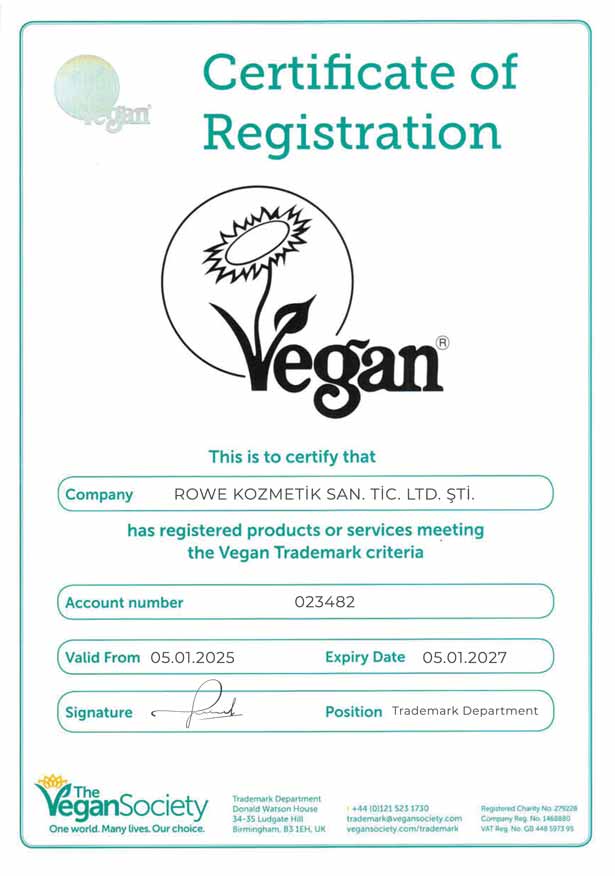
Rowe Cosmetics holds certification with The Vegan Society, the organisation behind the well-known Vegan trademark with the sunflower logo. For brand owners this has practical value:

  • Products that meet the criteria can be registered for the Vegan trademark, giving consumers and retailers an independent, recognisable signal on pack.
  • The criteria cover ingredients, manufacturing processes and the absence of animal testing, so the trademark addresses both the vegan and the testing question.
  • Registration is per product. Each formula is reviewed against the criteria, so it is worth deciding early which SKUs in your range should carry the logo.

Self-declared “vegan” wording without certification is used in the market, but it relies entirely on your own documentation and can be challenged by retailers or authorities. A recognised trademark reduces that risk and saves explanation in B2B sales.

How we approach a vegan product project

  1. Define the claim

    We agree whether the product should be vegan only, vegan and registered with The Vegan Society, or neither.

  2. Select raw materials

    Our R&D chemists choose or replace ingredients using supplier documentation on origin and processing.

  3. Sample and adjust

    You test samples for texture, fragrance and performance; we fine-tune the formula without leaving vegan-compatible options.

  4. Documentation for registration

    We provide the formula and INCI information needed for trademark registration and your regulatory file.

  5. Production and labelling

    The approved product is produced, filled and labelled with your artwork and, where registered, the Vegan trademark.

Vegan cosmetics manufacturing and claims regulation

In the EU and UK, cosmetic claims must be truthful and supported by evidence, in line with the common criteria for claims under the cosmetics rules. A vegan claim is therefore something your Responsible Person may ask you to substantiate. Our formulas are developed in line with EU Cosmetics Regulation (EC) No 1223/2009, and we supply the formula and INCI information your regulatory partner needs. If you are planning a new range, our guide on how to start a skincare brand covers the regulatory steps in more detail.

Whether you want to launch a fully vegan line or convert a few best-sellers, you can start from our private label formulas or ask our team to adapt your own formula through cosmetic formulation services.

Frequently Asked Questions

Is a vegan cosmetic automatically cruelty-free?

No. Vegan refers to ingredients; cruelty-free refers to animal testing. The Vegan Society trademark criteria cover both.

Can every product be made vegan?

Most skin, hair and body care products can. Some concepts built around animal ingredients, such as beeswax balms, need an alternative ingredient and may change slightly in texture.

Are all your products vegan?

We prioritise vegan raw materials, and vegan-certified products are possible. Whether a specific product is vegan depends on its final formula.

Can my own formula be converted to vegan?

Often yes. Our chemists review each ingredient and suggest vegan alternatives where needed, then produce samples for your approval.

Planning a vegan product line?

Tell us which products you want to launch and whether you need the Vegan trademark. We will suggest formulas and packaging to match.

Request a Manufacturing Quote

Tell us the product type, estimated quantity, packaging preference and target market — our manufacturing team will get back to you.

Phone / WhatsApp
+90 531 835 49 89 · WhatsApp

ISO 22716 (GMP) · ISO 9001 · The Vegan Society · Halal

    👋 We’re online.